

Introduction
Healthcare is one of the most important industries in the world. Every day, doctors and medical professionals use modern technology to identify diseases, examine injuries, and make decisions about patient treatment. Medical imaging plays an important role in this process because it allows healthcare professionals to see structures inside the human body without relying only on physical examinations.
One of the professionals who makes this possible is a radiology tech.
A radiology tech operates specialized medical imaging equipment to capture pictures of bones, organs, tissues, and other internal body structures. These images help doctors investigate medical conditions and determine the next steps in patient care.
Radiology technology combines healthcare knowledge, science, technical skills, and patient communication. It can be an interesting career for people who enjoy working with technology and want to contribute to the healthcare industry.
However, becoming a radiology tech requires more than learning how to operate an X-ray machine. Students need proper education, supervised clinical experience, an understanding of radiation safety, and the ability to communicate with patients.
What Is a Radiology Tech?
A radiology tech is a healthcare professional who performs diagnostic imaging examinations using specialized medical equipment. The professional captures images that physicians use to investigate injuries, diseases, and other medical conditions.
Radiology techs are also commonly called radiologic technologists or radiographers. Some people use the term X-ray technician, although radiologic technology can include several imaging specialties beyond conventional X-rays.
These professionals work with different types of medical imaging equipment, including:
- Conventional X-ray machines
- Computed tomography scanners
- Magnetic resonance imaging scanners
- Mammography systems
- Fluoroscopy equipment
- Other specialized diagnostic imaging systems
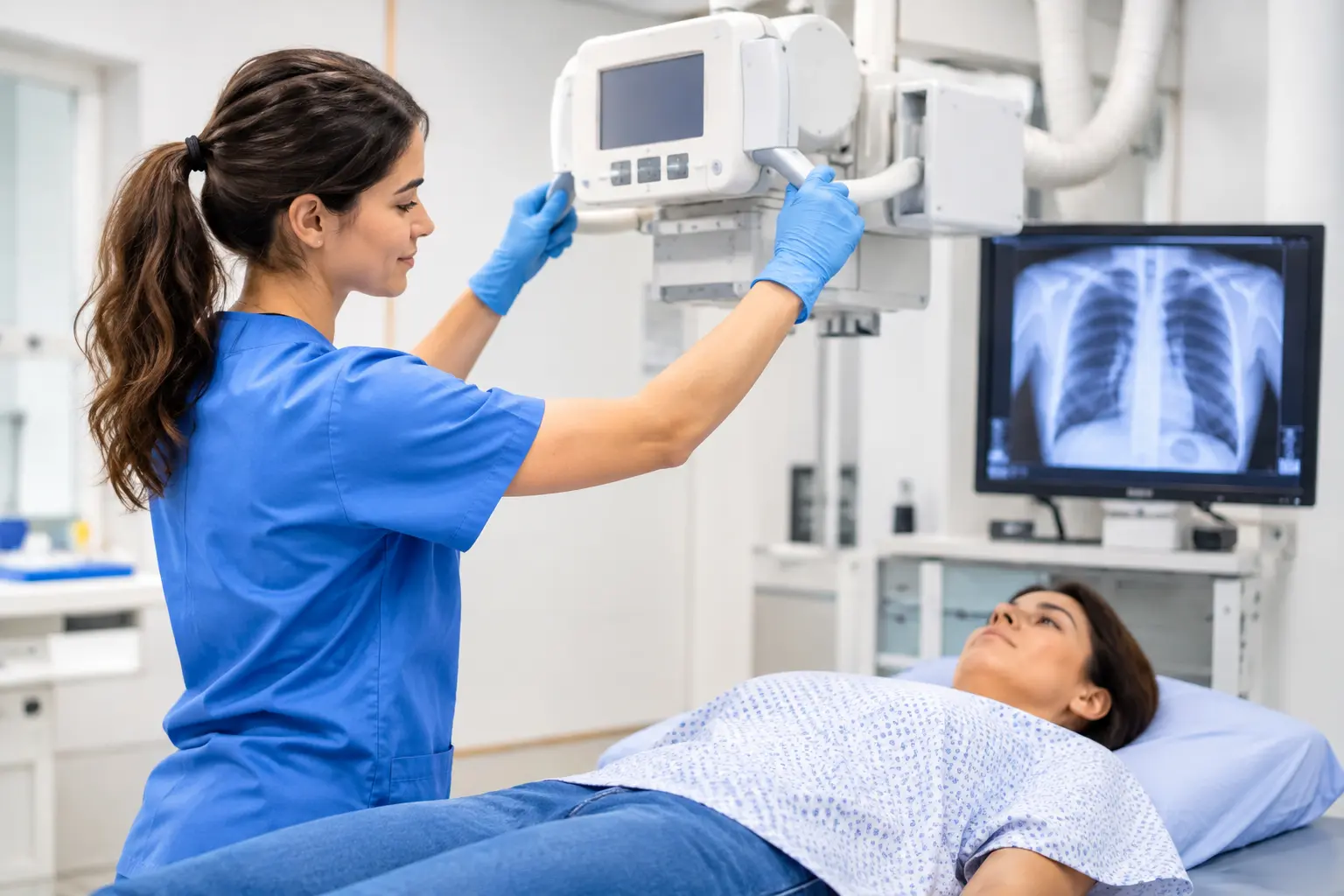
For example, a patient who visits a hospital with a possible bone fracture may need an X-ray examination. The radiology tech checks the examination request, prepares the patient, positions the affected body part, operates the equipment, and captures the required images.
The images are then made available to the appropriate physician or radiologist for interpretation.
The radiology tech does not normally make the final medical diagnosis. Instead, the professional focuses on obtaining accurate images and ensuring that the examination follows established safety and patient-care procedures.
This distinction is important because radiologic technologists and radiologists have different educational backgrounds and professional responsibilities.
What Does a Radiology Tech Do?
The daily responsibilities of a radiology tech depend on the workplace, imaging specialty, and type of patients being examined.
Some professionals perform routine X-ray examinations, while others work with advanced equipment used for CT scans, MRI examinations, and specialized procedures.
The following responsibilities are common in many radiology departments.
1. Preparing Patients for Medical Imaging
Patient preparation is one of the first responsibilities of a radiology tech.
Before an examination begins, the professional confirms the patient’s identity and reviews the imaging request. They may also ask relevant questions about medical history, previous examinations, injuries, or other information required by the procedure.
The technician explains what will happen and gives the patient clear instructions.
Some examinations require patients to remove certain clothing, jewelry, or metal objects. Other procedures may involve preparation instructions provided by the healthcare team.
Good communication is especially important when patients are nervous, elderly, injured, or experiencing pain.
2. Operating Medical Imaging Equipment
Radiology techs operate equipment designed to capture images of internal body structures.
Each machine has different operating procedures and technical requirements.
For example, conventional radiography uses X-rays to produce images. CT scanners use X-rays and computer processing to create cross-sectional images. MRI scanners use strong magnetic fields and radiofrequency energy.
The technician must understand the equipment, select appropriate examination settings within professional protocols, and follow the required procedures.
3. Positioning Patients Correctly
Patient positioning is essential for obtaining useful diagnostic images.
A radiology tech must position the patient according to the examination requirements. This may involve asking someone to stand, sit, lie down, turn to one side, or hold a specific position.
Incorrect positioning can affect image quality and may require additional images.
Some patients cannot move easily because of injuries, disabilities, or medical conditions. The technician must use safe positioning techniques and follow workplace procedures to avoid causing unnecessary discomfort.
4. Following Radiation Protection Procedures
Radiation protection is an important responsibility for professionals who operate X-ray and CT equipment.
These imaging methods use ionizing radiation, so technicians must follow established safety practices.
Common safety responsibilities include:
- Following approved imaging protocols.
- Using appropriate protective equipment when indicated.
- Limiting unnecessary radiation exposure.
- Avoiding unnecessary repeat examinations.
- Monitoring occupational exposure.
- Following applicable radiation safety regulations.
MRI is different because it does not use ionizing radiation. However, MRI technologists must follow strict magnetic-field safety procedures.
5. Checking Image Quality
After capturing images, radiology techs check whether the examination meets the required technical standards.
They may review positioning, clarity, exposure, and whether the correct body area is visible.
If images do not meet the required standards, additional imaging may be necessary according to the examination protocol.
This responsibility requires attention to detail and a strong understanding of medical imaging techniques.
6. Maintaining Patient Records
Radiology departments use digital systems to store examination information and medical images.
Technicians may enter relevant details into healthcare information systems and confirm that images are associated with the correct patient and examination.
They may work with Picture Archiving and Communication Systems, commonly known as PACS.
Accurate documentation helps healthcare professionals access the information needed for patient care.
7. Maintaining Imaging Equipment
Medical imaging equipment must be checked and maintained according to workplace procedures.
Radiology techs may perform routine checks, report technical problems, follow quality-control requirements, and coordinate with equipment maintenance professionals.
Reliable equipment is important for patient safety and consistent imaging quality.
8. Working With Doctors and Other Healthcare Professionals
Radiology techs work as part of a larger medical team.
They communicate with radiologists, physicians, nurses, medical assistants, and other healthcare workers.
Clear communication helps ensure that patients receive the correct examination and that imaging information reaches the appropriate medical professionals.
Different Types of Radiology Tech Specializations
Radiology technology includes several specialties. A professional may begin in general radiography and later pursue additional training in a particular imaging area.
1. X-Ray Technician
An X-ray technician performs conventional radiographic examinations.
These examinations are commonly used to investigate:
- Bone fractures
- Joint injuries
- Chest conditions
- Certain abdominal conditions
- Other medical concerns requiring radiographic imaging
X-ray technology is one of the most common starting points for a career in radiologic technology.
2. CT Scan Technologist
A computed tomography technologist operates CT scanners.
A CT examination uses X-rays and computer processing to create detailed cross-sectional images of the body.
Doctors may request CT examinations to investigate head injuries, internal bleeding, bone damage, chest conditions, and abdominal problems.
CT technologists need additional knowledge of scanning protocols, patient positioning, equipment operation, and radiation protection.
3. MRI Technologist
An MRI technologist operates magnetic resonance imaging equipment.
MRI uses strong magnetic fields and radiofrequency energy to produce detailed images of internal structures.
It is particularly useful for examining the brain, spine, joints, muscles, and certain internal organs.
MRI professionals must understand magnetic-field safety, patient screening, equipment operation, and examination protocols.
4. Mammography Technologist
A mammography technologist specializes in breast imaging.
Mammography equipment produces images used in breast screening and diagnostic examinations.
This specialty requires careful positioning, patient communication, and knowledge of specialized imaging procedures.
5. Fluoroscopy Technologist
Fluoroscopy provides real-time X-ray imaging.
It allows physicians to observe certain internal structures and the movement of contrast material during medical examinations.
Radiology techs working in this area may assist physicians with specialized procedures and operate equipment under the appropriate supervision.
6. Interventional Radiology Technologist
Interventional radiology technologists assist physicians during image-guided procedures.
These procedures use imaging technology to help guide diagnostic or treatment-related interventions.
The work may involve specialized equipment, sterile environments, patient monitoring, and coordination with other clinical professionals.
7. Nuclear Medicine Technologist
Nuclear medicine is a related but distinct imaging specialty.
These professionals use radiopharmaceuticals and specialized imaging equipment to examine how organs and tissues function.
It requires specific education and professional training. It should not be confused with conventional radiography.
How to Become a Radiology Tech
Becoming a radiology tech involves several important steps. The exact requirements depend on the country, state, educational institution, and professional credential you want to obtain.
For students planning to work in the United States, the following pathway provides a general overview.
Step 1: Complete High School Education
The first step is completing your high school education.
Students should pay attention to science and mathematics subjects because they provide a useful foundation for medical imaging studies.
Helpful subjects include:
- Biology
- Chemistry
- Physics
- Mathematics
- English and communication
A strong understanding of basic science makes it easier to learn anatomy, physiology, radiation physics, and imaging procedures.
Step 2: Research Radiology Tech Programs
After completing high school, research educational programs that prepare students for professional radiography.
Compare admission requirements, program length, tuition, accreditation, clinical training, and eligibility for professional certification.
In the United States, students should check the relevant accreditation and ARRT educational requirements before choosing a program.
Step 3: Complete the Required Education
Many aspiring radiologic technologists complete an associate degree through an appropriate educational pathway.
Some institutions also offer bachelor’s degree programs.
The curriculum combines classroom learning with practical clinical education.
Students learn how to use imaging equipment, communicate with patients, understand medical terminology, and follow safety procedures.
Step 4: Complete Clinical Training
Clinical training is a major part of radiologic technology education.
Students gain supervised experience in healthcare settings and learn how to perform imaging examinations.
Clinical education may include:
- Preparing patients.
- Positioning patients.
- Operating imaging equipment.
- Following examination protocols.
- Applying radiation protection procedures.
- Evaluating technical image quality.
- Communicating with healthcare professionals.
Clinical experience helps students understand the difference between classroom knowledge and real patient-care situations.
Step 5: Meet Certification Requirements
In the United States, many radiologic technologists pursue certification through the American Registry of Radiologic Technologists, known as ARRT.
The primary eligibility pathway includes education, ethics, and examination requirements.
Candidates should review the latest requirements directly with ARRT before applying.
Step 6: Check State Licensing Rules
Professional requirements vary across US states.
Many states require radiologic technologists to obtain a license or meet specific certification standards.
Students should check the rules of the state where they intend to work.
Step 7: Prepare a Professional Resume
Once the required education and credentials are complete, prepare a resume highlighting relevant qualifications.
Include:
- Educational background
- Clinical training
- Professional credentials
- Imaging equipment experience
- Patient-care skills
- Communication skills
- Relevant practical experience
A clear resume can help employers understand your preparation for an entry-level radiology position.
Step 8: Apply for Suitable Positions
Radiology techs can apply for positions in hospitals, diagnostic imaging centers, outpatient facilities, physician offices, and specialty healthcare organizations.
New graduates may begin in general radiography and explore additional specialties as they gain experience.
Radiology Tech Education Requirements
Education is one of the most important parts of this profession.
A radiology tech needs knowledge of human anatomy, medical imaging, radiation protection, patient care, and equipment operation.
In the United States, an associate degree or higher is required for the ARRT primary eligibility pathway, along with completion of an ARRT-approved educational program in the relevant discipline.
The exact requirements should always be checked with the credentialing organization.
Important Subjects in Radiology Tech Programs
- Human Anatomy: Students learn about bones, muscles, organs, tissues, and other body structures.
- Physiology: This subject explains how the human body functions.
- Medical Terminology: Students learn the language used by physicians and other healthcare professionals.
- Radiation Physics: This subject introduces the principles behind X-ray imaging and radiation.
- Radiographic Positioning: Students learn how to position patients for different examinations.
- Patient Care: Students develop communication, safety, and patient-support skills.
- Radiation Protection: Students learn how to follow procedures that reduce unnecessary exposure.
- Image Evaluation: Students learn about technical image quality and examination standards.
Can You Become a Radiology Tech Online?
Some colleges offer online or hybrid coursework related to medical imaging.
However, becoming a qualified radiology tech generally requires practical clinical education.
Students need supervised experience with patients and imaging equipment. This is difficult to replace with online lessons alone.
Before enrolling in an online program, check whether it meets the requirements for the professional credential or license you want to obtain.
Be careful with programs that promise professional qualification without appropriate clinical training.
Radiology Tech Salary: How Much Can You Earn?
Salary is an important factor when choosing a healthcare profession.
Radiology tech earnings depend on education, experience, professional credentials, workplace, location, and imaging specialty.
For readers considering employment in the United States, the Bureau of Labor Statistics provides official wage information.
According to the US Bureau of Labor Statistics, the median annual wage for radiologic technologists and technicians was $80,110 in May 2025.
The median annual wage for MRI technologists was $95,480 in May 2025.
These figures represent US national median wages. They are not guaranteed starting salaries or salary estimates for other countries.
Factors That Affect Radiology Tech Salary
1. Work Experience
Experienced professionals may qualify for positions with greater responsibilities and higher compensation.
New graduates usually have less practical experience than established professionals.
2. Geographic Location
Salary levels differ between states, cities, and healthcare markets.
Cost of living, employer demand, and local employment conditions can influence compensation.
3. Imaging Specialization
Different specialties have different training requirements and salary patterns.
CT and MRI professionals may have compensation structures that differ from general radiographers.
4. Type of Employer
Hospitals, outpatient care centers, diagnostic laboratories, and physician offices may offer different salary packages.
5. Professional Credentials
Additional qualifications can demonstrate specialized knowledge and may improve access to certain job opportunities.
6. Working Hours
Some healthcare facilities operate continuously.
Evening, overnight, weekend, and holiday shifts may have different compensation arrangements depending on the employer.
Is Radiology Tech a High-Paying Career?
Radiologic technology can offer competitive earnings in the United States compared with several other healthcare support occupations.
However, salary should not be the only reason to enter this profession.
Students should consider tuition costs, certification requirements, working conditions, career interests, and long-term opportunities.
A good career decision considers both financial goals and personal suitability.
Radiology Tech Job Outlook and Career Opportunities
Medical imaging is an important part of modern healthcare.
Doctors use diagnostic images to investigate injuries, examine internal structures, and support treatment planning.
As healthcare services develop, qualified imaging professionals remain important to hospitals and other medical facilities.
The US Bureau of Labor Statistics projects 5% employment growth for radiologic and MRI technologists combined between 2025 and 2035.
It also projects approximately 15,300 openings per year on average across these combined occupations during that period.
These projections apply to the United States and should not be treated as worldwide employment forecasts.
Why Are Radiology Techs Needed?
Growing Healthcare Needs
Patients require medical imaging for many reasons, including injuries, chronic conditions, and diagnostic investigations.
Healthcare facilities need trained professionals who can perform these examinations safely.
An Aging Population
Older adults may require imaging examinations to investigate injuries and other medical concerns.
This can increase the need for diagnostic services.
Advances in Medical Imaging
Imaging technology continues to develop.
Healthcare facilities need professionals who understand modern equipment, patient safety, and digital imaging systems.
Expansion of Outpatient Services
Patients can receive imaging services outside traditional hospital environments.
Diagnostic imaging centers and outpatient facilities create additional employment opportunities.
Specialized Diagnostic Services
Advanced imaging procedures require professionals with appropriate education and technical skills.
This creates opportunities for people who pursue additional qualifications.
Essential Skills Every Radiology Tech Needs
A successful radiology tech needs more than technical knowledge.
The profession combines equipment operation, patient communication, problem-solving, and attention to detail.
Technical Skills
Radiology techs must understand how imaging equipment works and how to perform different examinations.
They should be comfortable learning new technology and following technical procedures.
Communication Skills
Technicians explain examinations to patients and communicate with other healthcare professionals.
Clear communication can reduce confusion and improve the patient experience.
Attention to Detail
Correct positioning, patient identification, and examination settings are important.
A small mistake can affect the usefulness of an image or require an examination to be repeated.
Problem-Solving Skills
Patients may have difficulty moving, equipment may require attention, and unexpected situations may occur.
Technicians need to respond calmly and follow professional procedures.
Physical Stamina
The job may involve standing for extended periods and assisting patients with movement.
Physical stamina can help professionals manage demanding clinical schedules.
Empathy and Patience
Some patients experience pain, anxiety, or uncertainty.
A good technician treats patients respectfully and provides clear instructions.
Time Management
Busy imaging departments require professionals to manage examination schedules while maintaining patient-care and safety standards.
Where Do Radiology Techs Work?
Radiology techs work in different healthcare environments.
Each workplace has its own patient population, equipment, schedule, and responsibilities.
Hospitals
Hospitals are among the largest employers of radiologic technologists.
Technicians may work in emergency departments, diagnostic imaging departments, inpatient units, and operating-room environments.
Hospital positions can provide experience with a wide range of examinations.
Diagnostic Imaging Centers
Diagnostic centers specialize in examinations such as X-rays, CT scans, MRI scans, and mammography.
These facilities may offer opportunities to develop expertise in particular imaging procedures.
Outpatient Care Centers
Outpatient facilities provide medical imaging services to patients who do not need hospital admission.
These workplaces may have more predictable schedules than some hospital departments, although working conditions vary.
Physician Offices
Some medical practices operate imaging equipment for diagnostic purposes.
Radiology techs may work with physicians and other clinical staff in these environments.
Specialty Healthcare Facilities
Orthopedic clinics, cancer treatment facilities, and other specialty organizations may employ imaging professionals.
These workplaces often focus on particular patient needs and diagnostic procedures.
Advantages of Becoming a Radiology Tech
Radiologic technology offers several potential advantages.
1. Opportunity to Work in Healthcare
Radiology techs contribute to the diagnostic process and support medical professionals.
Their work helps doctors obtain images used in patient evaluation.
2. Different Specialization Options
Professionals can explore several areas of medical imaging.
These include general radiography, CT, MRI, mammography, and other specialties.
3. Combination of Technology and Patient Care
The profession is suitable for people who enjoy working with modern equipment while interacting with patients.
It combines technical and interpersonal responsibilities.
4. Multiple Workplace Options
Radiology techs can work in hospitals, diagnostic centers, clinics, and specialty healthcare facilities.
5. Professional Development
Additional training and credentials can help professionals develop new skills and pursue different responsibilities.
6. Meaningful Work
Medical imaging supports doctors in investigating health conditions.
Knowing that your work contributes to patient care can make the profession rewarding.
Disadvantages of Becoming a Radiology Tech
It is also important to understand the challenges.
1. Radiation Safety Responsibilities
Professionals who work with X-ray and CT equipment must follow radiation protection procedures.
They need to understand safety requirements and monitor occupational exposure where applicable.
2. Physically Demanding Duties
Technicians may spend much of their working day standing.
They may also help patients move into appropriate positions.
3. Emotional Challenges
Some patients are injured, frightened, or seriously ill.
Technicians must remain professional while supporting people during difficult situations.
4. Irregular Working Hours
Hospitals may require evening, overnight, weekend, and holiday shifts.
This depends on the department and employer.
5. Continuous Education
Imaging technology changes over time.
Professionals must maintain their knowledge and meet applicable continuing education requirements.
6. Competitive Educational Programs
Some radiologic technology programs have limited places.
Students may need to meet academic, health, and admission requirements before entering clinical training.
Difference Between a Radiologist and a Radiology Tech
People often confuse radiologists with radiologic technologists because both work in medical imaging.
However, these are different professions.
A radiologist is a physician who specializes in interpreting medical images and providing diagnostic reports.
A radiology tech is a healthcare professional who performs imaging examinations and operates diagnostic equipment.
The main differences are:
| Radiologist | Radiology Tech |
|---|---|
| Medical doctor | Medical imaging professional |
| Interprets medical images | Captures medical images |
| Provides diagnostic reports | Performs imaging procedures |
| Completes medical school and specialist training | Completes a relevant radiologic technology education pathway |
| May recommend further investigations | Helps obtain images required for medical evaluation |
| Focuses on medical interpretation | Focuses on imaging procedures and patient care |
Both professionals contribute to the imaging process, but their responsibilities and qualifications are different.
Radiology Tech Certification and Professional Development
Professional certification can demonstrate that a radiology tech meets recognized educational and examination standards.
In the United States, ARRT is an important credentialing organization for radiologic technologists.
What Is ARRT Certification?
The American Registry of Radiologic Technologists provides certification and registration in several medical imaging disciplines.
The primary pathway includes three major requirements:
- Education
- Ethics
- Examination
Candidates must complete an ARRT-approved educational program and meet the applicable degree requirement.
They must also satisfy the organization’s ethics requirements and pass the relevant examination.
Why Is Certification Important?
Certification may help professionals:
- Demonstrate their knowledge and skills.
- Meet employer requirements.
- Qualify for particular positions.
- Build professional credibility.
- Pursue additional imaging specialties.
Certification does not automatically replace state licensing requirements.
Students should check both professional credentialing requirements and local employment regulations.
Continuing Professional Development
Learning should continue after graduation.
Radiology techs may need to complete continuing education activities to maintain professional credentials.
Professional development can include additional training, workshops, advanced imaging education, and updated safety instruction.
Radiology Tech Career Growth Opportunities
A radiology tech can explore different career opportunities after gaining professional experience.
Advanced Imaging Specialties
Professionals may pursue additional education in CT, MRI, mammography, and other imaging disciplines.
Specialization can help them develop expertise in specific examinations.
Department Supervisor
Experienced professionals may move into supervisory roles.
These positions can involve staff coordination, scheduling, quality management, and department operations.
Clinical Instructor
Some experienced radiology techs become clinical instructors.
They support students during practical training and help them develop professional skills.
Healthcare Administration
Additional education and experience may help professionals pursue administrative responsibilities in healthcare organizations.
Imaging Department Management
Experienced professionals may explore management roles involving equipment, staff, workflow, safety, and service quality.
Radiology Tech Career in India
Radiology technology is also an important healthcare field in India.
Students interested in medical imaging can explore programs in radiography and medical imaging technology.
Common educational options include:
- Diploma in Radiography.
- Diploma in Medical Imaging Technology.
- Bachelor of Medical Radiology and Imaging Technology.
- BSc in Radiology and Imaging Technology.
The exact course name, duration, admission requirements, and recognition vary by institution.
Students should check the current eligibility requirements and institutional recognition before applying.
Where Can Radiology Technologists Work in India?
Qualified professionals may explore opportunities in:
- Government hospitals.
- Private hospitals.
- Diagnostic imaging centers.
- Medical colleges.
- Multispecialty hospitals.
- Specialty clinics.
- Other healthcare organizations.
Skills Required for Indian Students
Students should develop knowledge of human anatomy, medical imaging, patient care, equipment operation, and radiation safety.
Practical clinical training is especially important.
They should also understand the professional requirements applicable to their chosen qualification and workplace.
Career Opportunities in India
The Indian healthcare sector includes hospitals, diagnostic centers, and specialty medical facilities that use imaging equipment.
Graduates can explore entry-level opportunities according to their qualifications and the requirements of individual employers.
Further training may help them develop expertise in specific imaging technologies.
Important: US salary figures and ARRT certification requirements should not be applied directly to Indian employment. Education, professional recognition, licensing, and compensation differ between countries.
How to Choose the Best Radiology Tech School
Choosing the right college or educational program is an important decision.
A recognized program with proper clinical training can help students prepare for professional responsibilities.
Consider the following factors before applying.
1. Accreditation and Recognition
Check whether the institution and program meet the educational and professional requirements relevant to your intended career.
For US students, review ARRT eligibility and recognized educational pathways.
2. Clinical Training Opportunities
Look for programs that provide supervised clinical experience.
Students need practical opportunities to understand patient positioning, equipment operation, and imaging procedures.
3. Experienced Instructors
Qualified instructors can help students understand technical concepts and develop professional habits.
4. Equipment and Learning Facilities
Check whether the institution provides appropriate imaging equipment and practical learning facilities.
5. Tuition and Other Costs
Compare tuition fees, examination charges, books, uniforms, travel, and clinical placement expenses.
6. Program Outcomes
Ask about graduation rates, certification examination performance, and employment support.
7. Admission Requirements
Understand the academic qualifications, prerequisite subjects, health requirements, and application deadlines before applying.
Do not select a school simply because it advertises a short course or promises immediate employment.
Is Radiology Tech a Good Career?
Radiology tech can be a good career for people interested in healthcare, science, medical technology, and patient care.
It offers a combination of technical responsibilities and direct interaction with patients.
You may enjoy this profession if you:
- Like biology and medical science.
- Are interested in modern imaging technology.
- Enjoy practical and hands-on work.
- Communicate comfortably with different people.
- Can follow detailed instructions.
- Want opportunities for professional development.
- Can work in a clinical environment.
However, the profession may not be suitable for everyone.
People who strongly dislike patient interaction, physical clinical duties, or detailed safety procedures should research the working environment carefully before choosing this path.
The best career decision depends on your interests, educational plans, and long-term goals.
Future of Radiology Technology
Medical imaging continues to develop as healthcare organizations adopt new equipment and digital systems.
Radiology techs will need to understand changing technologies and maintain their professional skills.
Artificial intelligence is also becoming part of medical imaging workflows.
AI-based systems may help with image processing, workflow management, and certain image-analysis tasks. However, technology does not remove the need for qualified professionals who understand patient care, equipment operation, safety, and clinical procedures.
Future professionals may benefit from learning about:
- Digital imaging systems.
- Advanced CT technology.
- MRI equipment.
- Image management platforms.
- Quality assurance.
- Patient safety.
- AI-supported imaging workflows.
Continuous learning will remain important for professionals who want to adapt to changes in medical imaging.
Frequently Asked Questions About Radiology Tech
1. What is a radiology tech?
A radiology tech is a healthcare professional who operates medical imaging equipment to capture images of internal body structures. Physicians use these images to investigate injuries and medical conditions.
2. How long does it take to become a radiology tech?
The time depends on the country, educational pathway, and professional requirements. In the United States, an associate degree is a common pathway, followed by the necessary certification and licensing steps.
3. Is a radiology tech the same as an X-ray technician?
The terms are sometimes used interchangeably. However, radiologic technology includes several imaging specialties, while an X-ray technician generally works primarily with conventional X-ray equipment.
4. How much does a radiology tech make?
In the United States, the median annual wage for radiologic technologists and technicians was $80,110 in May 2025, according to the Bureau of Labor Statistics. Actual salaries depend on experience, location, specialization, and employer.
5. Do radiology techs need a degree?
Many US education and certification pathways require an associate degree or higher. Requirements vary between countries and professional organizations.
6. Can radiology techs perform MRI scans?
Yes. MRI technologists receive specialized education and training to operate MRI equipment and perform examinations.
7. Do radiology techs diagnose diseases?
Generally, no. Radiology techs perform imaging examinations and capture images. Qualified physicians interpret those images and provide diagnostic information.
8. Where do radiology techs work?
They work in hospitals, diagnostic imaging centers, outpatient facilities, physician offices, and specialty healthcare organizations.
9. What subjects are important for radiology tech students?
Important subjects include anatomy, physiology, biology, physics, medical terminology, radiation protection, and patient care.
10. Is radiology tech a stressful job?
It can be challenging because technicians may work with emergency patients, busy schedules, and examinations that require accuracy. Good communication and time-management skills can help.
11. Can radiology techs work part-time?
Some employers offer part-time positions, although availability depends on the healthcare facility and local employment market.
12. Can radiology techs specialize after graduation?
Yes. With appropriate education, training, and credentials, professionals may pursue specialties such as CT, MRI, and mammography.
13. Is radiology tech physically demanding?
It can be. Technicians may stand for long periods and help patients move into examination positions.
14. Do radiology techs work night shifts?
Some do, especially in hospitals that provide imaging services around the clock. Working hours depend on the department and employer.
15. Is radiology technology a good career in India?
It can be an option for students interested in healthcare and medical imaging. Students should research recognized courses, clinical training, employer requirements, and local employment opportunities.
16. What is the difference between a radiology tech and an MRI tech?
A radiology tech in general radiography commonly performs X-ray examinations. An MRI tech specializes in magnetic resonance imaging and must understand MRI equipment and magnetic-field safety.
17. Can you become a radiology tech without clinical training?
Professional radiography education generally requires supervised clinical experience. Online coursework alone is not a substitute for practical training requirements.
18. What is the future of radiology tech jobs?
Medical imaging remains important in healthcare. Employment projections in the United States indicate continued growth in the combined radiologic and MRI technologist occupations through 2035.
Conclusion
A radiology tech plays an important role in modern healthcare by operating medical imaging equipment and helping doctors obtain accurate diagnostic images.
The profession combines technical knowledge, medical science, patient communication, and safety responsibilities. It offers different career pathways, including general radiography, CT, MRI, mammography, and other specialized imaging fields.
However, becoming a successful radiology tech requires proper education, clinical experience, and an understanding of professional certification and licensing requirements.
Students should research educational programs carefully, compare training opportunities, and understand the career requirements in the country where they plan to work.
For people who enjoy healthcare, technology, and practical patient care, radiologic technology can provide an interesting professional direction.
The best way to begin is to understand the educational pathway, select an appropriate program, develop practical skills, and continue learning as medical imaging technology advances.
