

Introduction
Walk into a home today and you can tell within seconds whether it was built for the last decade or the next one. The lights respond before you flip a switch. The shades glide shut as the sun angles in. Music follows you from room to room without a single visible speaker wire. This is not science fiction — it is the everyday reality that companies like Ava Tech are building, one integrated system at a time.
Ava Tech has carved out a niche in the increasingly crowded smart home and audio-visual integration space by focusing on something surprisingly rare in the industry: making complex technology feel effortless. Rather than handing homeowners a stack of remote controls and a dozen disconnected apps, Ava Tech designs and installs unified systems that bring audio, video, lighting, shades, patio screens, and whole-home automation together under one intuitive umbrella.
What Is Ava Tech?
At its core, Ava Tech is a technology integration company that specializes in bringing together the systems that make a modern home comfortable, secure, and enjoyable to live in. The company’s focus areas typically include:
- Audio systems — distributed, whole-home audio that lets you play different music in different rooms, or the same track throughout the house, without visible wiring or clunky hardware.
- Video and home theater — everything from a dedicated media room with a projector and acoustically treated walls to discreet televisions integrated into everyday living spaces.
- Lighting control — programmable lighting scenes that adjust brightness, color temperature, and mood based on time of day, activity, or a single tap on a keypad.
- Motorized shades — automated window treatments that manage natural light, privacy, and energy efficiency without anyone needing to walk over and pull a cord.
- Patio and outdoor screens — retractable screening systems that extend living space outdoors while keeping insects and harsh sun at bay.
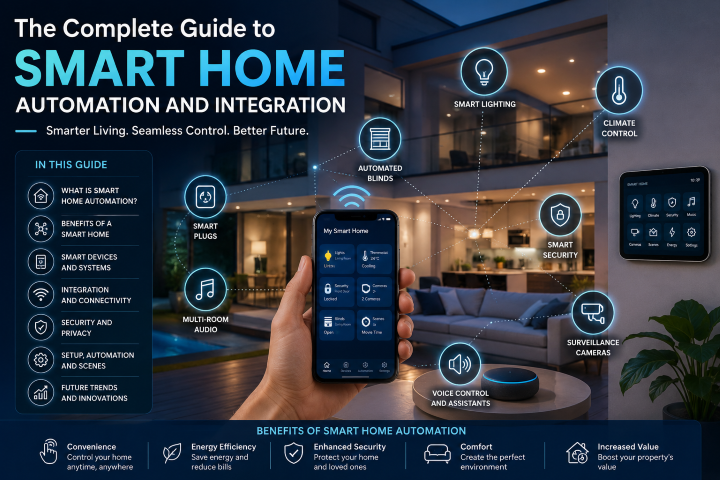
- Whole-home automation — the software and control layer that ties every one of these systems together into a single, coherent experience, accessible from a wall panel, a smartphone app, or voice command.
What separates a company like Ava Tech from a typical electronics retailer is the emphasis on integration rather than installation alone. Anyone can mount a television or install a smart bulb. The harder, more valuable work is making sure that television, those bulbs, the thermostat, the shades, and the speakers all talk to each other and respond to a single, simple set of commands — “movie night,” “good morning,” “away for the weekend” — instead of requiring the homeowner to manage each device separately.
The Rise of Integrated Smart Home Technology
To understand why companies like Ava Tech exist and why demand for their services has grown so quickly, it helps to look at how home technology has evolved.
A decade or so ago, “smart home” technology largely meant a handful of standalone gadgets: a smart thermostat here, a smart speaker there, maybe a video doorbell. Each device came with its own app, its own account, and its own quirks. The result was a fragmented experience — genuinely useful in isolated moments, but rarely more than the sum of its parts.
Two things changed that. First, the underlying technology matured. Wireless protocols became more reliable, control hubs became more powerful, and manufacturers began building products with integration in mind rather than as an afterthought. Second, and just as importantly, consumer expectations shifted. People who had grown used to the frictionless experience of asking a voice assistant to play a song or dim a light began expecting that same simplicity to extend across their entire home, not just a single speaker on a kitchen counter.
This is the gap that professional integrators fill. It is one thing to buy a smart bulb from a store shelf. It is another thing entirely to design a lighting plan for an entire home that accounts for natural light patterns throughout the day, coordinates with motorized shades, adjusts automatically for movie nights, and still looks and feels like ordinary, elegant lighting rather than a science experiment. That level of coordination requires design expertise, technical know-how, and — critically — an understanding of how real families actually live in their homes.
Also read: tech demis
Core Service Areas: A Closer Look
Audio Integration
Distributed audio is often the first thing people notice when they walk into a professionally integrated home. Instead of a single Bluetooth speaker that needs to be carried from room to room, in-ceiling and in-wall speakers are placed throughout the home and tied into a central audio system. This allows for:
- Whole-home audio where the same song plays consistently in every room.
- Zone-based control, where each room or “zone” can play different content independently — jazz in the kitchen, a podcast in the home office, silence in the nursery.
- Outdoor audio extended to patios, pool areas, and backyards using weather-resistant speakers designed to blend into landscaping.
The design work behind audio integration is often invisible by design. Good speaker placement accounts for room acoustics, ceiling height, and furniture layout so that sound quality remains excellent even though the hardware itself disappears into the architecture.
Video and Home Theater
Video integration spans a wide range, from a simple television mounted cleanly with hidden cabling, to a dedicated home theater room built for genuinely cinematic viewing. A well-designed home theater considers:
- Screen size and viewing distance, calculated based on the specific dimensions of the room.
- Acoustic treatment, so sound doesn’t bounce chaotically off hard surfaces.
- Ambient light control, often achieved by pairing the theater with automated blackout shades.
- Seating and sightlines, ensuring every seat has a clear, comfortable view.
Beyond the dedicated theater, many integrators also handle “everyday” video needs — televisions in bedrooms, kitchens, and living rooms that are wired into the same whole-home system so that a single remote or app can control every screen in the house.
Lighting Control
Lighting is one of the most transformative categories in smart home integration, and also one of the most misunderstood. Smart lighting is not just about turning bulbs on and off from a phone. Done well, it is about scenes — pre-programmed combinations of brightness and color temperature suited to specific activities and times of day.
A “morning” scene might bring lights up slowly and warmly to ease a household awake. A “dinner” scene might dim overhead lighting while bringing up accent lighting over the table. A “movie” scene might cut most lighting to a low, warm glow that doesn’t interfere with the screen. All of this can be triggered with a single button press, a voice command, or automatically based on time of day and occupancy sensors.
Lighting control also plays a significant role in energy efficiency. Automated scheduling ensures lights are not left on unnecessarily, while daylight-responsive dimming can reduce reliance on artificial lighting during bright parts of the day.
Motorized Shades
Motorized shades sit at the intersection of comfort, privacy, and energy efficiency. Automated window treatments can be scheduled to rise with the sun, close during the hottest part of the afternoon to reduce cooling costs, or drop automatically at dusk for privacy — all without anyone needing to remember to do it manually.
For larger homes with dozens of windows, or homes with hard-to-reach windows above staircases or over kitchen sinks, motorization is not just a convenience but a practical necessity. Integrating shades into the same control system as lighting and climate control also allows for more sophisticated automation, such as shades adjusting automatically in response to a home theater scene being activated.
Patio Screens and Outdoor Living
As outdoor living spaces have become a bigger focus of home design, retractable patio screening has grown in popularity. These systems extend usable living space by keeping insects out and sun exposure manageable, while retracting completely out of sight when not needed. Integrating these screens into a broader automation system allows them to respond to weather conditions, time of day, or simple voice and app commands, just like an indoor shade.
Whole-Home Automation
The final, and arguably most important, piece of the puzzle is the automation layer that ties everything together. This is the software and control infrastructure that allows a homeowner to say “good night” and have the lights dim, the shades close, the thermostat adjust, and the doors lock — all through a single command rather than five separate actions.
Whole-home automation systems are typically accessible through:
- In-wall touch panels, offering a permanent, always-available control point in key rooms.
- Smartphone and tablet apps, for control from anywhere in or out of the home.
- Voice assistants, integrated so that popular platforms can trigger scenes and control devices hands-free.
- Physical keypads, for simple, reliable control without needing to unlock a phone.
The goal of a well-designed automation system is redundancy and simplicity at the same time: multiple ways to control the home, all leading to the same effortless outcome.
Why Work With a Dedicated Integration Company
It is entirely possible to buy smart devices individually and set them up yourself. Many people do exactly that, and for a single smart plug or a video doorbell, that approach works fine. But as the number of connected systems in a home grows, the case for professional integration becomes much stronger, for several reasons.
- Reliability: A do-it-yourself smart home often relies on consumer-grade Wi-Fi networks and a patchwork of apps from different manufacturers, which can lead to dropped connections, slow response times, and devices that fall out of sync with each other.
- Design integration: A professional integrator thinks about how technology fits into the architecture and interior design of a home, not just how it functions. That means hidden wiring, in-ceiling speakers instead of bulky standalone units, and lighting fixtures chosen to complement a home’s aesthetic rather than clash with it.
- Single point of contact: When something goes wrong in a fragmented DIY smart home, troubleshooting often means figuring out which of five different manufacturers is responsible for the problem.
- Future-proofing: Technology moves quickly, and a system designed piecemeal today can become an incompatible mess in a few years. Professional integrators design systems with expansion in mind, using infrastructure and control platforms that can accommodate new devices and capabilities as they become available, rather than requiring a full replacement.
- Time savings: Perhaps most simply: researching, purchasing, configuring, and troubleshooting a full smart home system yourself takes a significant amount of time. A professional integration company brings that expertise so homeowners can enjoy the result without the learning curve.
What to Expect When Working With a Company Like Ava Tech
Every integrator’s process looks a little different, but most professional engagements follow a broadly similar path, and understanding this process can help set realistic expectations if you’re considering hiring one.
1. Initial Consultation
The process typically begins with a conversation about how the home is used day to day. A family with young children has very different needs than a couple who frequently entertains, and a good integrator will ask about lifestyle, priorities, and budget before recommending any specific technology.
2. Design and Planning
Based on that consultation, the integrator develops a design plan — which rooms will have audio, where shades will be installed, how lighting scenes will be structured, and how everything will be wired and networked. For new construction or major renovations, this stage often needs to happen early, since wiring and infrastructure decisions are far easier to make before walls are finished.
3. Proposal and Budgeting
A detailed proposal typically follows, outlining the scope of work, the specific products involved, and the associated costs. Because smart home systems can range enormously in scope — from a single media room to a fully automated estate — this stage is important for aligning expectations before installation begins.
4. Installation
Once a plan is approved, the installation itself takes place. This is where speakers are mounted, wiring is run, panels are installed, and shades are fitted. For existing homes, integrators experienced in retrofits will typically have techniques for running wiring with minimal disruption to walls and finishes, or may recommend wireless alternatives where appropriate.
5. Programming and Configuration
Hardware installation is only half the job. The system then needs to be programmed — lighting scenes configured, audio zones set up, automation routines built, and everything connected to a central control interface. This is often the stage where the real “magic” of integration becomes apparent, as previously separate devices begin working together as a single system.
6. Testing and Walkthrough
Before considering the job complete, a thorough integrator will test every component and scene, then walk the homeowner through how to use the system — including apps, panels, and any voice control features. This training stage matters enormously; a technically excellent system that a homeowner doesn’t know how to use well falls short of its potential.
7. Ongoing Support
Smart home technology, unlike a traditional appliance, tends to need occasional updates and adjustments over time. Reputable integrators typically offer ongoing support, whether that means troubleshooting connectivity issues, adding new devices to an existing system, or updating automation routines as a family’s needs change.
Common Questions About Smart Home Integration
Does a whole-home system have to be installed all at once? Not necessarily. Many homeowners start with a single room — often a media room or living space — and expand over time. A well-designed initial system will be built on infrastructure that supports future expansion, so later additions integrate smoothly rather than requiring a system overhaul.
Will motorized shades and automated lighting increase energy efficiency? Yes, often significantly. Shades that close automatically during peak sun hours reduce cooling costs, while scheduled and occupancy-based lighting reduces unnecessary electricity use. Over time, these savings can offset a meaningful portion of the system’s cost.
Is professional installation necessary, or can these systems be self-installed? Simple individual devices can generally be self-installed. But as systems grow more complex — particularly when multiple categories like audio, video, lighting, and shades need to work together seamlessly — professional installation becomes increasingly valuable for reliability, aesthetics, and long-term support.
How long does a typical installation take? This varies enormously depending on scope, ranging from a single day for a modest media room setup to several weeks for a full new-construction whole-home system. An integrator will typically provide a project timeline as part of the proposal stage.
Emerging Trends Shaping the Future of Smart Home Integration
The smart home industry does not stand still, and the companies leading it are constantly adapting to new technology, new consumer expectations, and new standards. A few trends are worth understanding, both because they shape what an integrator like Ava Tech might recommend today, and because they hint at where the industry is headed.
- Interoperability standards: For years, one of the biggest frustrations in the smart home world was fragmentation — a device built by one manufacturer often could not communicate cleanly with a device built by another. Newer connectivity standards designed specifically for smart home interoperability have begun to change that, allowing devices from different brands to work together more reliably under a single control system.
- Energy awareness: As utility costs and environmental awareness both continue to rise, homeowners increasingly want their automation systems to actively manage energy use, not just add convenience.
- Health and wellness integration: Circadian lighting — lighting that shifts color temperature throughout the day to support natural sleep and wake cycles — has moved from a niche feature to a mainstream request. Similarly, air quality monitoring and automated ventilation controls are increasingly being folded into whole-home systems, reflecting a broader shift toward homes designed with occupant wellbeing in mind, not just entertainment and convenience.
- Simplified, unified control: Even as the number of connected devices in a home increases, the trend in control interfaces is toward simplification, not complexity. Rather than a dozen separate apps, homeowners increasingly expect — and integrators increasingly deliver — a single, coherent interface that governs the entire home.
- Outdoor living as a core focus: What was once treated as an afterthought — patios, decks, and backyard spaces — has become a central part of home design and, by extension, home automation.
A Realistic Look at Costs and Planning
One of the most common questions homeowners have when considering a system like the ones Ava Tech installs is, understandably, “What will this cost?” The honest answer is that it depends enormously on scope. A single-room audio and lighting setup will cost dramatically less than a full-home automation system spanning dozens of rooms, multiple video zones, and motorized shades throughout.
That said, there are a few general principles worth understanding when planning a project and budget:
- New construction is generally more cost-effective than retrofits: Running wiring before walls are closed up is significantly less labor-intensive than doing so afterward, which is why integrators strongly encourage homeowners building new homes to bring them in early in the design process.
- Infrastructure costs more than devices, but pays off over time: A well-designed network, control hub, and wiring plan is often a larger portion of the budget than any individual smart device, but it is also what allows the system to expand smoothly in the future rather than needing to be replaced.
- Phased installations can spread out cost: Rather than automating an entire home at once, many homeowners choose to start with the highest-impact areas — often a media room or main living space — and expand over subsequent years as budget allows.
- Ongoing support has a cost, but prevents bigger costs later: Systems that are monitored and maintained tend to have far fewer major failures than systems left entirely alone after installation, which is why many integrators offer service plans alongside initial installation.
Choosing the Right Integration Partner
Not every homeowner will work specifically with Ava Tech, and that’s fine — the broader point of this guide is to help you understand what a good integration partner should offer, regardless of which company you ultimately choose. A few questions are worth asking any integrator before signing a contract:
- Can they show examples of past projects similar in scope to yours? A company experienced in small, single-room installations may not be the right fit for a large new-construction whole-home project, and vice versa.
- What brands and platforms do they work with, and why? A good integrator should be able to explain why they recommend specific products, not just install whatever they have on hand.
- What does ongoing support look like? Ask specifically about response times, service plans, and how future expansions or troubleshooting are typically handled.
- How do they approach design, not just installation? The best integrators think about how a system looks and feels within a home’s existing architecture and interior design, not just whether it functions correctly.
- Do they offer a clear, itemized proposal? Transparency in scope and pricing early on tends to prevent misunderstandings and scope creep later in a project.
Taking the time to ask these questions upfront tends to save significant frustration later, since smart home systems — unlike a single appliance — are meant to function together as a long-term investment in how a home operates day to day.
Final Thoughts
The appeal of a company like Ava Tech lies not in any single gadget or feature, but in the experience of a home that simply works the way you want it to, without friction, without a stack of remotes, and without needing to think about the technology at all. Audio that follows you from room to room. Lighting that adjusts itself to the moment. Shades that manage themselves throughout the day. A theater room built specifically around how you actually watch movies. And an outdoor patio that extends your living space with the tap of a button.
That is the promise of professional smart home integration — and it is exactly the kind of experience that companies specializing in audio, video, lighting, shades, and automation are built to deliver. Whether you are starting from scratch in a new build or looking to modernize a home you’ve lived in for years, working with a dedicated integrator like Ava Tech means the difference between a home full of disconnected gadgets and a home that genuinely feels effortless to live in.
If you’re considering a smart home upgrade, the best first step is simple: have a conversation with an integrator about how you actually live in your home, and let that conversation guide the technology — not the other way around.
Read Also: tech demis
