Most “Smartphones to watch in 2026” lists were written in January, back when the S26, the Pixel 11, and Apple’s foldable were all rumors. It’s now late September, and a lot of those rumors have turned into real products with real price tags. This guide sorts the year’s headline phones into what you can buy today, what just launched, and what’s still on the horizon, so you can decide whether to buy now or wait.
One caveat up front: phone specs and prices change by country, and some details below come from launch coverage rather than our own hands-on testing. Treat every number as a guide, and check the manufacturer’s page before you spend money.
Which 2026 Flagships Can You Actually Buy Right Now?
Three families of Smartphones are already on shelves, and each one is aimed at a different kind of buyer.
Samsung Galaxy S26 Ultra. This is Samsung’s headline slab phone for the year. Its signature feature is a hardware Privacy Display toggle that narrows the viewing angle so people beside you can’t read your screen. Several roundups this year have called it the best Android flagship for anyone who doesn’t need to watch the price.
Samsung Galaxy Z Fold8. Samsung’s newest book-style foldable arrived in July. It pairs a 4.1-inch FlexWindow cover screen with a 6.9-inch inner display and ships with One UI 9. It also adds camera tools aimed at video, such as a grip mode and dual recording.
Google Pixel 11 series. Google announced the lineup on August 12 and started shipping it on August 20. The range runs from the base model up to the Pro Fold. Because it’s only weeks old, independent long-term reviews are still coming in, so we’d hold off on strong conclusions about battery life and camera consistency until more of them land.
What Did Apple Announce for 2026?
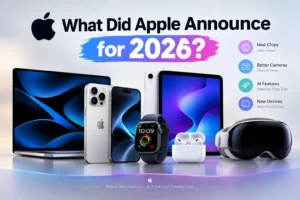
Apple’s September 9 event was unusual because it skipped the standard iPhone 18. Launch reporting says Apple announced the iPhone 18 Pro and Pro Max, plus its first foldable iPhone. The foldable’s name is still inconsistent across coverage, with “iPhone Ultra,” “iPhone Fold,” and “iPhone Duo” all in circulation, so check Apple’s own site before you search for it.
Pricing is the number everyone is watching. One event summary reports $1,199 for the iPhone 18 Pro and $1,299 for the Pro Max, with the Pro shipping from September 18 in more than 65 countries. The foldable is the real sticker shock: pre-event estimates from analysts put it at roughly $2,000 to $2,300 at the low end, and higher for large storage tiers. We’d treat the foldable’s final price and ship date as something to confirm on Apple’s product page rather than trust from us.
The standard iPhone 18, the iPhone 18e, and the iPhone Air 2 are expected in spring 2027. If you wanted a cheaper, non-Pro iPhone, that means roughly six more months of waiting.
Why Are Flagship Phones Getting More Expensive?
Memory. Analyst firm TrendForce reported that the cost of a 256GB memory chip rose by nearly 400% year over year, and estimated that the bill of materials for a 256GB Pro-class iPhone is around 38% higher than a year earlier. Its projection is a 10% to 20% price rise across new models.
This isn’t only an Apple story. Memory sits inside every phone and every AI-capable PC, so the cost pressure reaches Samsung, Google, and Chinese brands too. It’s the main reason a lot of buyers this year feel that a flagship costs noticeably more for a fairly modest upgrade.
Which Android Phones Are Worth Watching in Q4?
Xiaomi 17 Ultra. It’s already out, and it’s one of the most talked-about camera phones of the year. It pairs a 1-inch main sensor with a 200MP telephoto camera and offers optional photography kit accessories.
Xiaomi 18 series. This is the next big Android launch to watch. Reports expect the Pro model to use Qualcomm’s next flagship chip on a 2nm process, while the standard model uses a cheaper 3nm version to keep the price in check. There are also rumors that Xiaomi may drop the Ultra name in favor of a Pro Max, but that’s unconfirmed.
Xiaomi 18 Fold. Coverage describes a 7.6-inch inner display, a 6,000mAh battery, 67W wired and 50W wireless charging, and Xiaomi’s first in-house Xring O3 processor. It’s a good example of a brand betting on its own silicon instead of buying a chip off the shelf.
Huawei Mate XT2. Leaks point to a Kirin 9050 Pro chip, a battery of 6,000mAh or more, and a stylus in the box. Because of US sanctions it ships without Google services, so it’s mainly relevant to China and other markets comfortable with Huawei’s own software.
What Should You Look for in a 2026 Phone?
Specs sheets are less useful than they used to be, so these are the questions worth asking:
- Battery type and real-world endurance. Silicon-anode batteries are letting some brands fit 6,000mAh or more into a normal-sized phone, and Samsung and Apple have been slower to adopt them than several Chinese brands.
- How much AI runs on the device. Phones now ship with on-device assistants that can take multi-step actions, which ties into the shift we explain in our guide to what agentic AI actually means. It’s worth checking which features work offline and which send your data to the cloud.
- Software support length. A phone that gets seven years of updates is a better buy than a slightly faster one that gets three.
- Repair and accessory availability. Foldables in particular carry first-generation risk, so look at warranty terms and screen-repair pricing before you commit.
Buy Now or Wait?
Here’s how we’d think about it, depending on what you have and what you want:
- You have a phone from 2022 or earlier. Almost any current flagship is a big jump, so waiting for a rumor rarely pays off.
- You want a Pixel. The 11 series is out, so the wait is over. Reviews will tell you more in the coming weeks.
- You want an iPhone. The 18 Pro and Pro Max are available now. If you’re after a cheaper model, spring 2027 is the earliest window.
- You want a foldable. The Z Fold8 is the safest current option, since it’s a proven product line. Apple’s and Xiaomi’s foldables are first-generation devices, which usually means early adopters absorb the rough edges.
- You want an Android flagship with the newest chip. Wait for the Xiaomi 18 series and other launches built on Qualcomm’s next chip, expected over the next few months.
What About Buyers in India?
Flagships this year are expensive almost everywhere, and we haven’t confirmed India-specific launch pricing for every phone above, so verify local prices before you plan a purchase. For most Indian buyers the better value sits in the mid-range, where a lot of the useful improvements from flagships trickle down within a year. If your budget is closer to ₹20,000 than ₹1,00,000, start with our guide to the best smartphones under ₹20,000 in India.
Bottom Line
The story of 2026 phones isn’t one breakout device. It’s a year of higher prices driven by memory costs, foldables finally reaching the mainstream from Samsung, Google, Apple, and Xiaomi, and AI features moving onto the phone itself. If you can wait, the next few months bring the next wave of Android flagships. If your smartphone is old and struggling, you don’t need to wait for anything.
Frequently Asked Questions
Which is the best smartphones of 2026 so far?
It depends on what you value. Several roundups rate the Galaxy S26 Ultra as the best Android flagship for buyers without a tight budget, and the Xiaomi 17 Ultra is often named for photography. The iPhone 18 Pro is the pick for people already in Apple’s ecosystem.
Did Apple release a standard iPhone 18 in 2026?
No. Apple’s fall 2026 lineup centers on the iPhone 18 Pro, iPhone 18 Pro Max, and a foldable. The standard iPhone 18, iPhone 18e, and iPhone Air 2 are expected in spring 2027.
How much does the foldable iPhone cost?
Analyst estimates before the event ranged from about $2,000 to $2,300 for the entry configuration, with higher storage tiers costing more. Confirm the final price and name on Apple’s website, since coverage has used several different names for the device.
When did the Pixel 11 launch?
Google announced the Pixel 11 series on August 12, 2026, and it went on sale on August 20.
Why are new phones more expensive in 2026?
A large rise in memory chip costs is the main driver. TrendForce reported that a 256GB memory chip cost nearly 400% more year over year and projected phone price increases of roughly 10% to 20%.
Should I wait for the Xiaomi 18 or buy a phone now?
If you need a phone now, buy now. If your current phone works and you want the newest Android chip, waiting a few months for the Xiaomi 18 series and rival launches is reasonable.
This article reflects launch coverage and industry reporting as of late September 2026. Specifications, pricing, names, and availability vary by country and may change, so verify details with the manufacturer before buying.